
SSGT Morris Meyers: The Man My Dad Never Stopped Waiting For
SSGT Morris Meyers | The Man My Dad Never Stopped Waiting For
by Bill Beigel
Morris Meyers was 24 years old when he disappeared. He was from Detroit — just under five and a half feet tall, 155 pounds, green eyes, brown hair, not married. He was on his way to England to join the 385th Bombardment Group when a B-17 carrying him and nine other men vanished over the North Atlantic on June 21, 1943.
He was also my dad’s cousin. Morris is the reason I started doing this work.
Detroit, Michigan
Morris Meyers was born on November 18, 1918. His parents, Max and Celia, lived at 16141 Linwood Avenue in Detroit. He had a sister, Betty, who would one day join in the desperate search for answers about her brother. The records don’t tell us much about who Morris was as a person — what he cared about, what he was like to be around. They rarely do. But they tell us where he was, what he trained for, and what happened to my dad’s idol.
My dad spent much of his childhood in that same house on Linwood Avenue. He was 12 years old the summer Morris shipped out. Morris was the closest thing he had to a brother — older, already in uniform, someone to be proud of and wait for.
A Year of Training
Between April 1942 and February 1943, Morris moved through five stations across the country: Davis-Monthan Field in Arizona, a CPE stop in Salt Lake City, Topeka, AAB Lowell in Massachusetts, and Fort Riley in Kansas. That’s a lot of ground covered in less than a year. Each posting meant new aircraft, new crews, new procedures. By February 1943 he had his assignment — 550th Bombardment Squadron (Heavy), 385th Bombardment Group (Heavy), Eighth Air Force — and by June he was heading overseas to join them in England.
By the time he headed out for Europe, he was Staff Sergeant Morris Meyers. His serial number was 36171991. The dental chart in his file is dated January 24, 1942 — one of the first things the Army documented when he came in. That chart would eventually be one of the few physical records of him that survived.
A Fatal Misunderstanding
B-17 #42-30254, call sign “Jobey A,” took off from Gander Lake, Newfoundland on the morning of June 21, 1943, bound for Prestwick, Scotland. This wasn’t a combat mission. It was a ferry crossing to join the 385th Bomb Group— the transatlantic hop that thousands of American airmen made before they ever saw action. Standard procedure. The ten men aboard were:
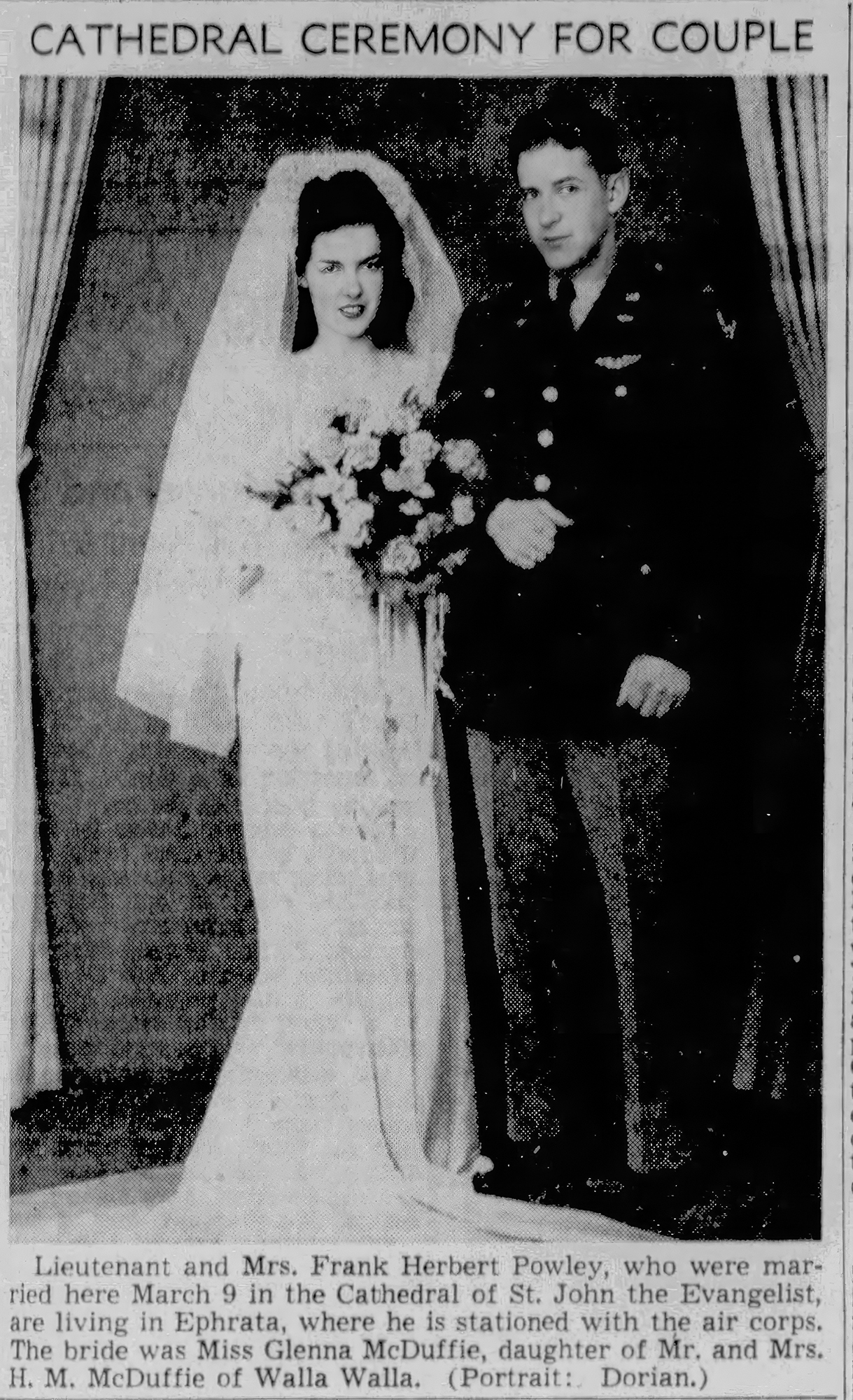
2nd Lt. Herbert F. Powley
2nd Lt. Fred G. Montgomery
2nd Lt. Lloyd J. Boor
2nd Lt. Pat H. Ruffin
T/Sgt. Ralph F. Atkins
T/Sgt. David J. McGadey
S/Sgt. Morris Meyers
S/Sgt. James A. Riggs
S/Sgt. William F. Hahn
Pvt. Thomas N. Cockfield
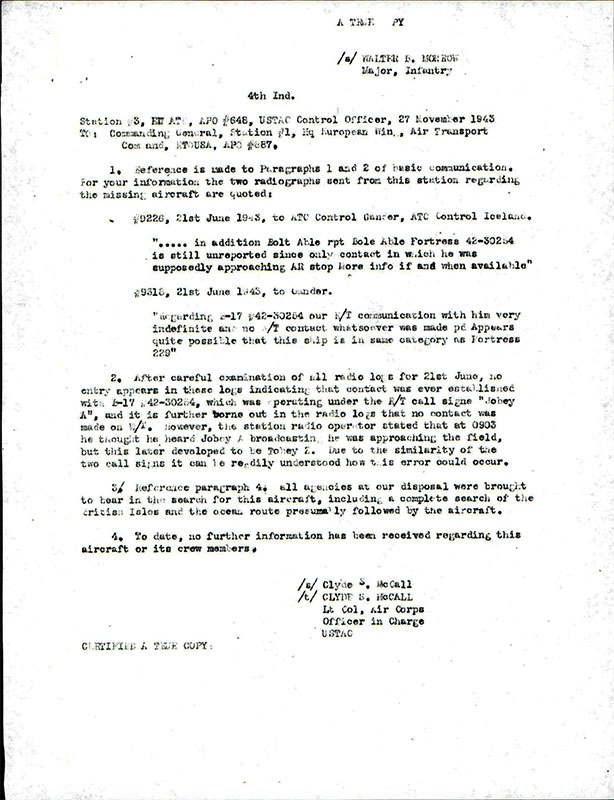
After takeoff, the plane made no confirmed radio contact. A radio operator at the Scotland end of the route thought he heard “Jobey A” approaching at 0903 GMT. It turned out to be a different plane with a similar call sign. By the time anyone understood the error, the moment for a real-time response had passed.
Investigators examined every radio log from both the Canadian and Scottish ends of the crossing. Search teams covered the British Isles and the full ocean route the aircraft would have followed. They found nothing. No wreckage. No crew. No trace.
The North Atlantic is not a forgiving place. Weather was the most likely cause of the plane’s disappearance. There is no other explanation on record.
Seven Months of Waiting
The Army listed Morris as Missing in Action on June 21, 1943. For seven months, that’s all the Meyers family had.
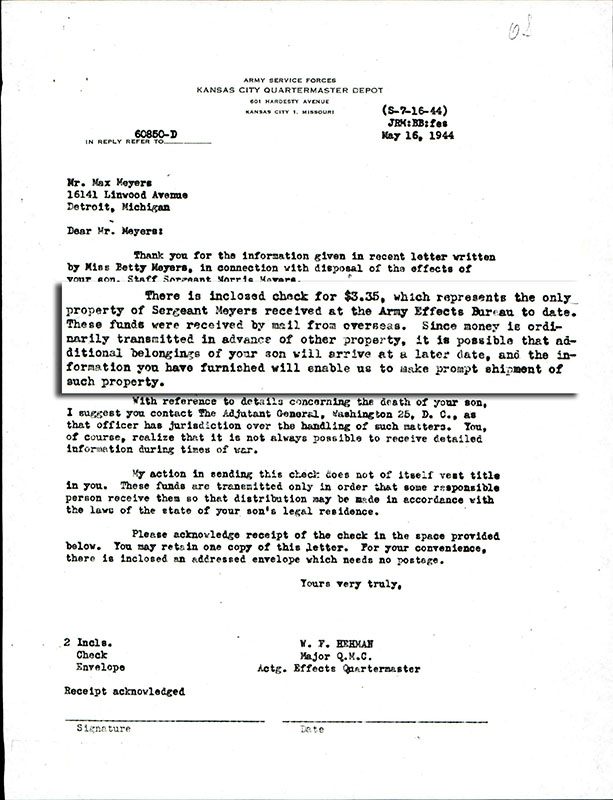
In November 1943, the 550th Bombardment Squadron forwarded Morris’s effects to the Army Effects Bureau in Kansas City: a money order for $3.35, which was everything found with his belongings. That amount — $3.35 — was sent to Max Meyers, Morris’s father, the following May, along with a letter directing any questions about the circumstances of his son’s death to the Adjutant General’s office in Washington.
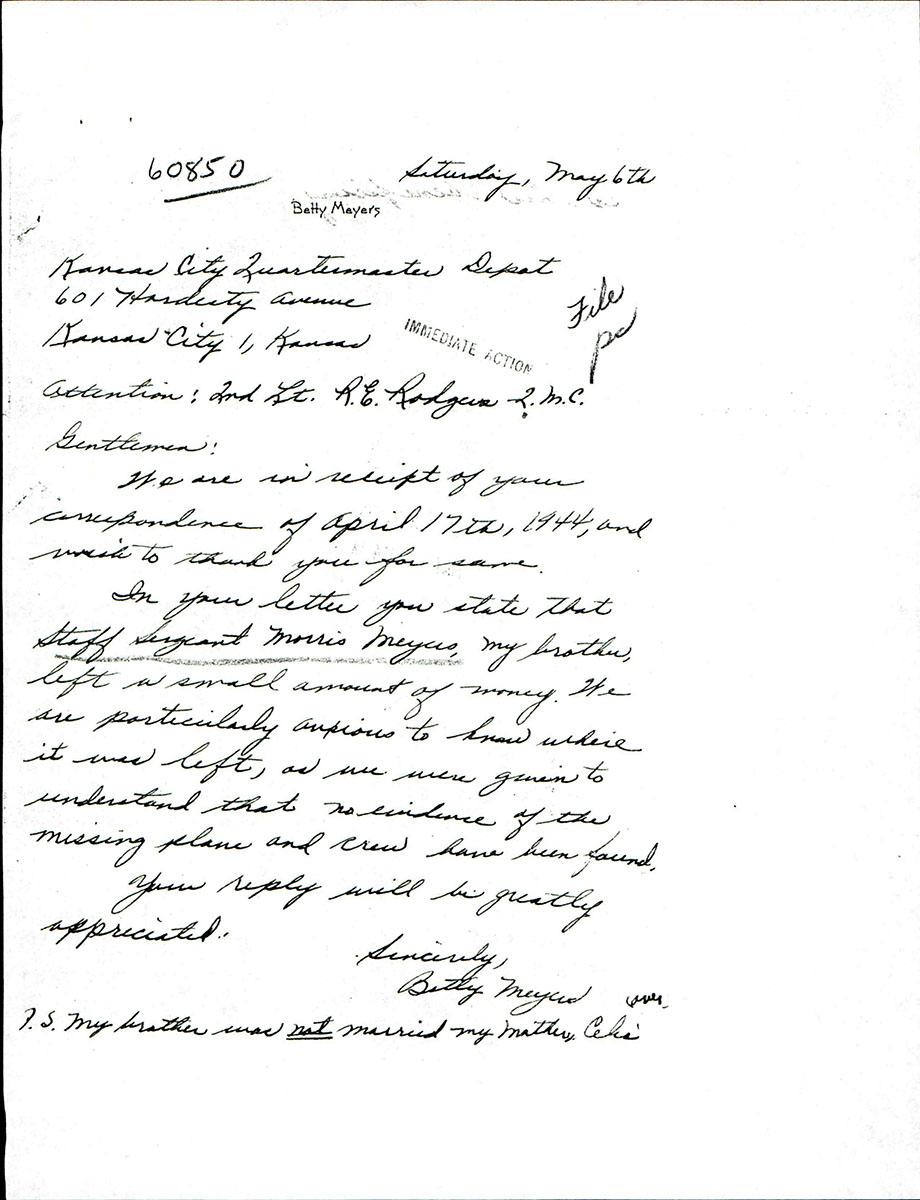
Betty Meyers, Morris’s sister, wrote back in May 1944. She wanted to know where the money had been found, noting that as far as the family knew, no evidence of the plane or crew had been located. I read that letter when I finally obtained the file decades later. She signed it “Sincerely, Betty Meyers,” and added a postscript: her brother “was not married to my mother Celia,” correcting an ambiguity in Morris’s file.
She didn’t get a real answer.
On February 1, 1944, the War Department officially declared Morris dead. The Report of Death, issued February 8, listed his cause of death as “Airplane Accident.” His home address: Detroit, Michigan.
All Ten Crew Non-Recoverable
The bureaucratic machinery kept moving for years after that. A Board of Officers convened in Paris on March 31, 1947, and formally declared the remains of all ten crew members non-recoverable. That finding was approved by the Chief of the Memorial Division and forwarded to the American Graves Registration Command. A final reexamination of the records in March 1951 confirmed it. For purposes of memorialization, the area of death was designated as Newfoundland, Code 13.
The search was closed. The family was left with no answers, no body to bring home, and no grave for Morris Meyers.
What I Found
In 1999, seemingly out of the blue, my dad told me about the cousin he’d lost as a boy. He asked me if I could find out any information about what happened to Morris and his missing B-17. And so I started looking.
The internet was new and what official records remained from World War 2 were hard to find. The fire at the National Personnel Records Center in 1973 had destroyed millions of individual personnel records from the US Army and Air Force.
It took about a year, but I finally had a copy of Morris’s deceased personnel file — pages of correspondence, official forms, incremental approvals moving up and down the chain of command, a dental chart, and an inventory of his few personal effects. And alongside it, letters from the father of the plane’s co-pilot (2nd LT Fred Montgomery): a man who had pushed the Army for answers and written everything down.
The file told me what most likely happened. The B-17 went into the ocean. The weather on that crossing could be brutal, and no trace of the aircraft was ever found. There was no combat. No enemy action.
That search is where this work started. I now had a process for locating records for servicemen who died in the war. Piecing together stories for men who survived would come much later. But the questions I asked then began the same way as the questions I’m asked now:
What happened to my person?
What the records told us about Morris wasn’t a happy ending — just the truth. A young man from Detroit who went into the ocean before he ever reached the war. After more than fifty years, my dad finally knew what had happened.
It turned out that mattered more than either of us expected.
PHOTO CREDITS
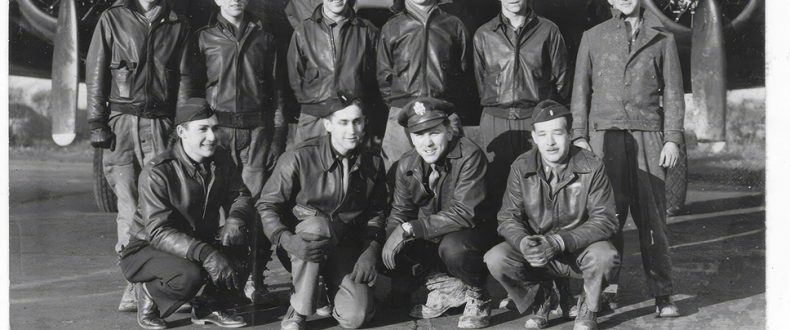
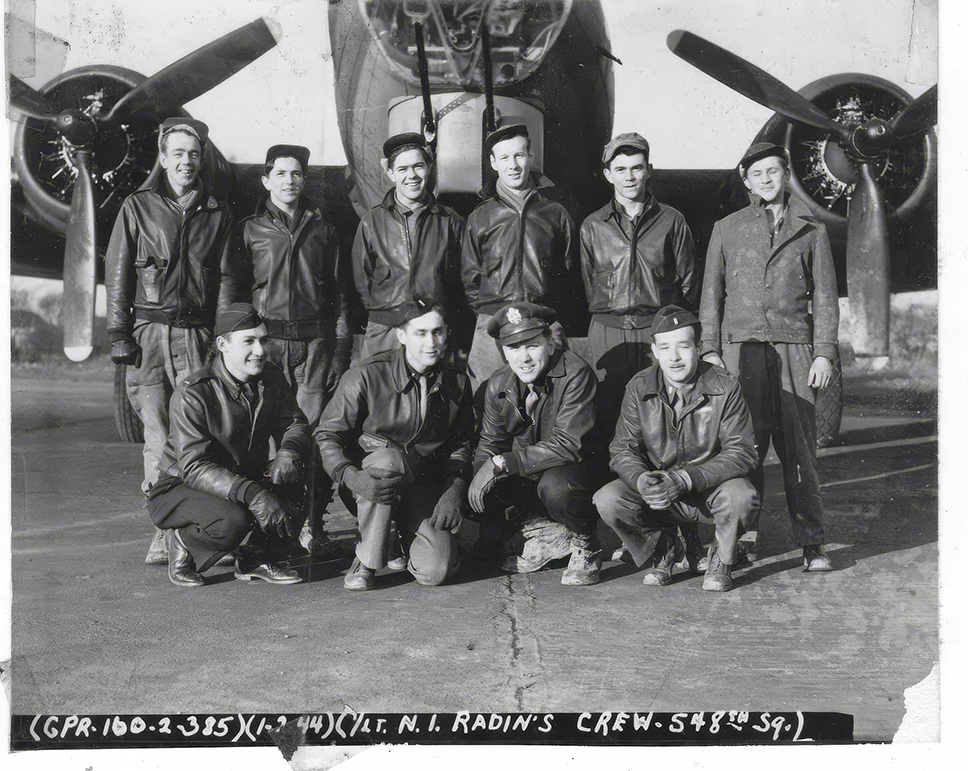
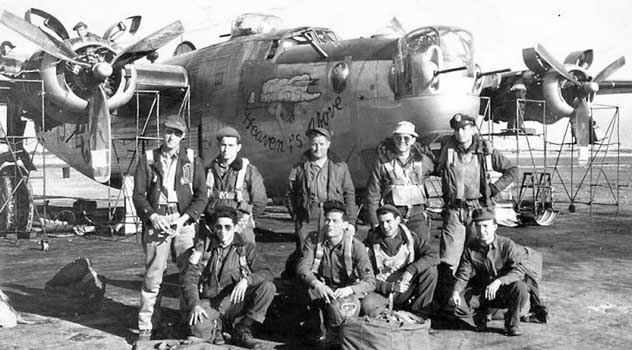
PHOTO 1 — Radin Crew The crew of 1st Lt. N.I. Radin, 548th Bombardment Squadron, 385th Bombardment Group, pose in front of their B-17 in early 1944. No photographs of Staff Sergeant Morris Meyers or the crew of B-17 “Jobey A” are known to exist. | Photo courtesy of the 385th Bombardment Group Association https://www.385thbga.com/photos/air-crews/
PHOTO 2 — Powley wedding photo 2nd Lt. Herbert F. Powley and his bride, the former Miss Glenna McDuffie, on their wedding day, March 9, 1943, at the Cathedral of St. John the Evangelist in Spokane, Washington. Powley was the pilot of B-17 “Jobey A” and one of ten men lost over the North Atlantic on June 21, 1943. | Spokane Review, Spokane, Washington, March 28, 1943
PHOTO 3 — IDPF p. 14, radio communication report The 4th Indorsement, signed by Lt. Col. Clyde S. McCall, U.S. Transatlantic Aircraft Control, November 27, 1943. McCall’s report confirmed that radio logs showed no contact was ever established with B-17 #42-30254 on June 21, 1943 — and that the 0903 GMT signal believed to be “Jobey A” approaching Prestwick was, in fact, a different aircraft with a similar call sign. | From the Individual Deceased Personnel File of S/Sgt. Morris Meyers, National Archives
PHOTO 4 — IDPF p. 21, letter to Max Meyers re: $3.35 Letter from the Kansas City Quartermaster Depot to Max Meyers, May 16, 1944, enclosing a check for $3.35 — the only property of SSGT Morris Meyers received by the Army Effects Bureau. The letter directed any questions about the circumstances of his son’s death to the Adjutant General’s office in Washington. | From the Individual Deceased Personnel File of S/Sgt. Morris Meyers, National Archives, researched by Bill Beigel
PHOTO 5 — IDPF p. 22, Betty Meyers’s letter Handwritten letter from Betty Meyers to the Kansas City Quartermaster Depot, dated Saturday, May 6 [1944]. Betty wrote to ask where her brother’s money had been found, noting the family had been told no evidence of the missing plane or crew had been located. In a postscript, she clarified that her brother “was not married” to Celia — correcting an ambiguity in his file that had prompted the Army to ask whether Morris had left a widow. | From the Individual Deceased Personnel File of S/Sgt. Morris Meyers, National Archives
Ask Bill or comment on this story
Five From the 464th Bomb Group
The 15th Army Air Force, based in...Wee Willie and the photo that started it all
Above is B-17 “Wee Willie”...From Panatella to Ploesti
The 15th Army Air Force, based in...Six B-24s From Baker Box Downed
The men – the boys, really...Debut for Debach
It was the very first combat mission...The World War II Dead of University of California at Los Angeles (UCLA)
More than 260 UCLA students, faculty ...


SSGT Morris Meyers: The Man My Dad Never Stopped Waiting For
SSGT Morris Meyers | The Man My Dad...TEC5 Genaro A. Caruso — What the Records Don’t Tell Us
(Troop C, 25th Cavalry Reconnaissance...Nicasio C. Sifuentes: One Week at the Front
(Company A, 10th Armored Infantry...PFC Oscar B. Oakman: The Last Man to Die in the 94th Armored Field Artillery Battalion
(PFC Oscar B. Oakman, 4th Armored...The 4th Armored Division: The Spearhead of Patton’s Third Army
Activated in April 1941 at Pine Camp,...Talk Radio One’s Steven Spierer Interviews WW2 Researcher Bill Beigel
Steven Spierer Talk Radio One Interview...


LOST B-25 “El Aguila” (“The Eagle”) With Crew and Passengers
Hi Georgia: So sorry for this slow response. I'd love to connect with you some time. I suspect that there is information on your great-uncle that is unknown to you. Rather than write up a lengthy e-mail, I suggest that we get on the phone for a brief discussion of our research options. Please use this link: https://calendly.com/ww2research/30min to my calendar to schedule a phone meeting. There is no cost for this research consultation with me; I look forward to talking with you. Best regards, BillSix B-24s From Baker Box Downed
Hello April: Sorry for this slow response. I'd be happy to trade some history with you. You can reach me at bill.beigel@ww2research.com. I might even be able to locate some information that is new to you. Best, BillFive From the 464th Bomb Group
Hi Janice: I apologize for my late replay to your note! We can certainly re-create your father's service with the 454th Bomb Group. Rather than write up a lengthy e-mail, I suggest that we get on the phone for a brief discussion of our research options. Please use this link: https://calendly.com/ww2research/30min to my calendar to schedule a phone meeting. There is no cost for this research consultation with me; I look forward to talking with you. Best regards, BillThe Murder of WAC Private Byrl Babcock
I agree with Vanessa. This is such a compelling story and so well written. It really packed a punch to read that she didn’t return to her base after her leave ended… there was no answer at the hotel room… she and her husband both died of gunshot wounds…Lt. Ecke personally accompanied Byrl’s casket on the journey to CA, stood as honor guard during the funeral, and presented the flag to Byrl’s mother. I loved learning that her headstone did NOT have the last name of her abusive husband who murdered her! I am very curious now to look at WW2 memorials to see if I can find any women’s names listed. It never occurred to me to look before.SSGT Morris Meyers: The Man My Dad Never Stopped Waiting For
So you know how I feel about my cousin, 2Lt A.D. (Alvis Deryl) Noble, I know that he was born on my grandfather's farm in Hopkins Co. Texas, where my father and his and 5 other brothers and 4 sisters were born, then the next information I have is the casualty report after his death as his records were lost in the St. Louis fire. I was born in 1956, 12 years after his death. But I want to thank you once again for your help with what I do know about 2Lt Noble. Sincerely A .D. ( Alan Dale ) NobleSSGT Morris Meyers: The Man My Dad Never Stopped Waiting For
WOW. Great job Something like that for the crew of the B2 nine Salvo Sally that bombed Masaki yes Japan on April 28, 1945. The flight engineer Fred MacDonald was my first cousin husband. The plane went in the ocean. Most likely the gunners are got out and got in parachutes, but only one survived and I found him in St. Louis Missouri Japan held a huge memorial for the crew on April 28, 2018. The survivor was Jack B Cannon. He died. I think he was 94.
Bill’s WWII Almanac










Bill found the USMC records of my uncle who served as in the Pacific from 1942 through to the end of the war. Due to Covid it took some time as NARA was closed but Bill found the records and sent them along with a note.
What he does is exemplary and his dedication is laudable. If you are in search of family military history I highly recommend Bill’s skills.
WOW. Great job
Something like that for the crew of the B2 nine Salvo Sally that bombed Masaki yes Japan on April 28, 1945. The flight engineer Fred MacDonald was my first cousin husband. The plane went in the ocean. Most likely the gunners are got out and got in parachutes, but only one survived and I found him in St. Louis Missouri Japan held a huge memorial for the crew on April 28, 2018. The survivor was Jack B Cannon. He died. I think he was 94.
So you know how I feel about my cousin, 2Lt A.D. (Alvis Deryl) Noble, I know that he was born on my grandfather’s farm in Hopkins Co. Texas, where my father and his and 5 other brothers and 4 sisters were born, then the next information I have is the casualty report after his death as his records were lost in the St. Louis fire. I was born in 1956, 12 years after his death. But I want to thank you once again for your help with what I do know about 2Lt Noble. Sincerely A
.D. ( Alan Dale ) Noble